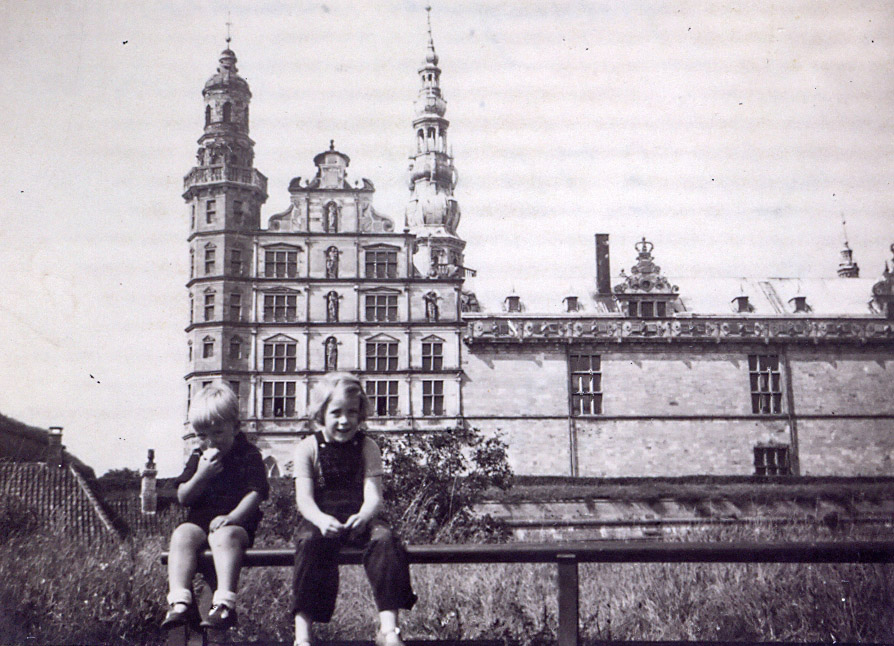
The Jørgensen story reaches back eleven generations to Søren Winther (c.1550), who worked the Hedegaard farm in Todbjerg parish, eastern Jutland. For three centuries, this line remained rooted within a fifteen-kilometer radius of what is now Aarhus—farming, weaving, and serving as parish clerks in the villages of Mejlby, Todbjerg, Egå, and Hjortshøj.
Dagmar Härtel née Jørgensen (1889–c.1964) was born on 9 May 1889 in Mejlby Mark to Laurs Peter Jørgensen, a husmand (smallholder) and væver (weaver), and Ane Kirstine Pedersen. Danish church records (kirkebøger) document her baptism, vaccination, and confirmation at Mejlby Kirke in 1903, where she received the grade "god" (good). Her father Laurs Peter died young at 42 in 1890, when Dagmar was barely a year old. Her mother Ane Kirstine remarried in 1892 to Nils Andersen.
A genealogical discovery reveals that Dagmar's grandparents were first cousins—both Karen Laursdatter and Peder Laursen Kuk were children of Laurids Michelsen and Anne Andersdatter. This was legal in Denmark but unusual, creating "double Ane numbers" in the ancestry chart.
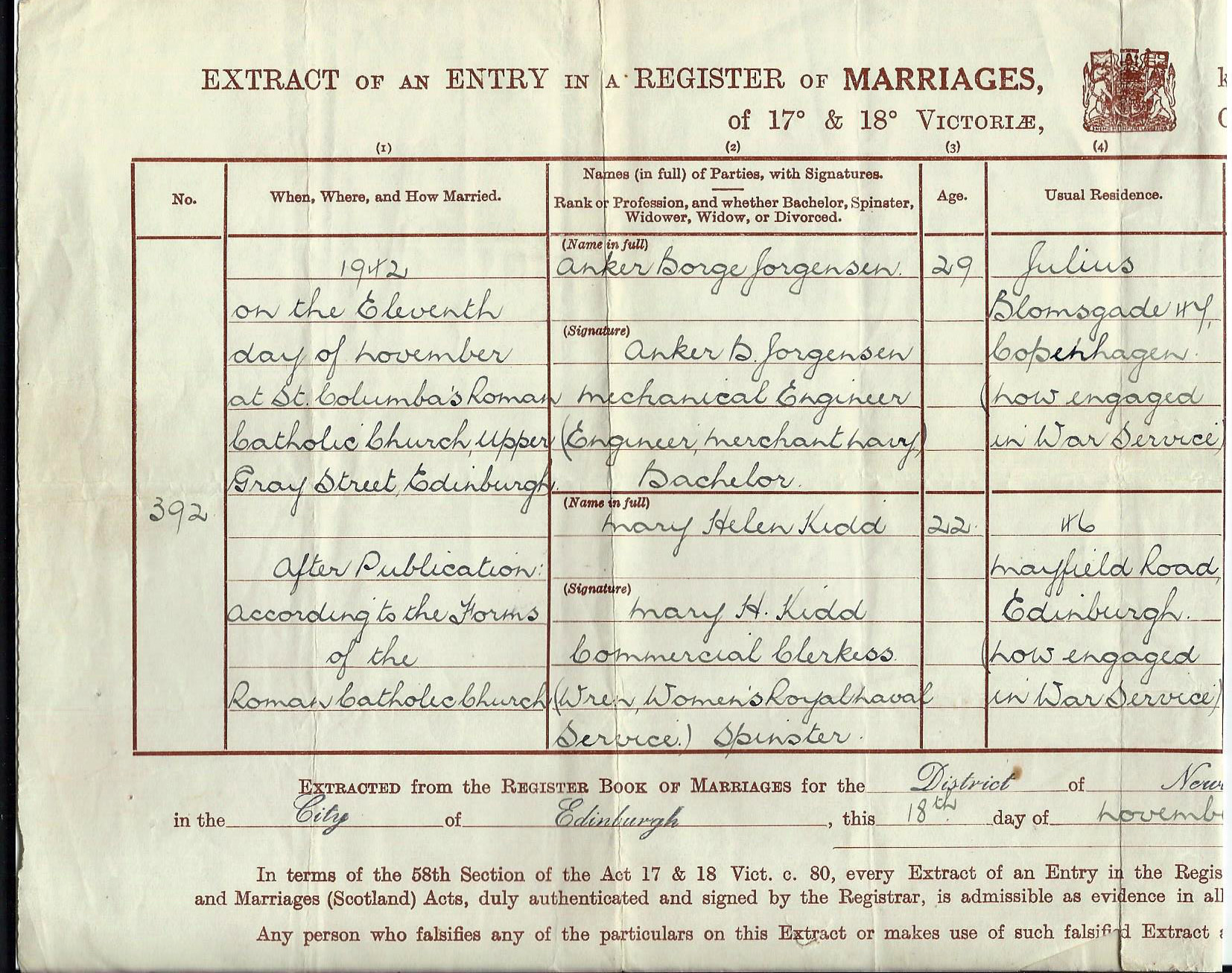
Marriage Registry, Edinburgh, November 1942
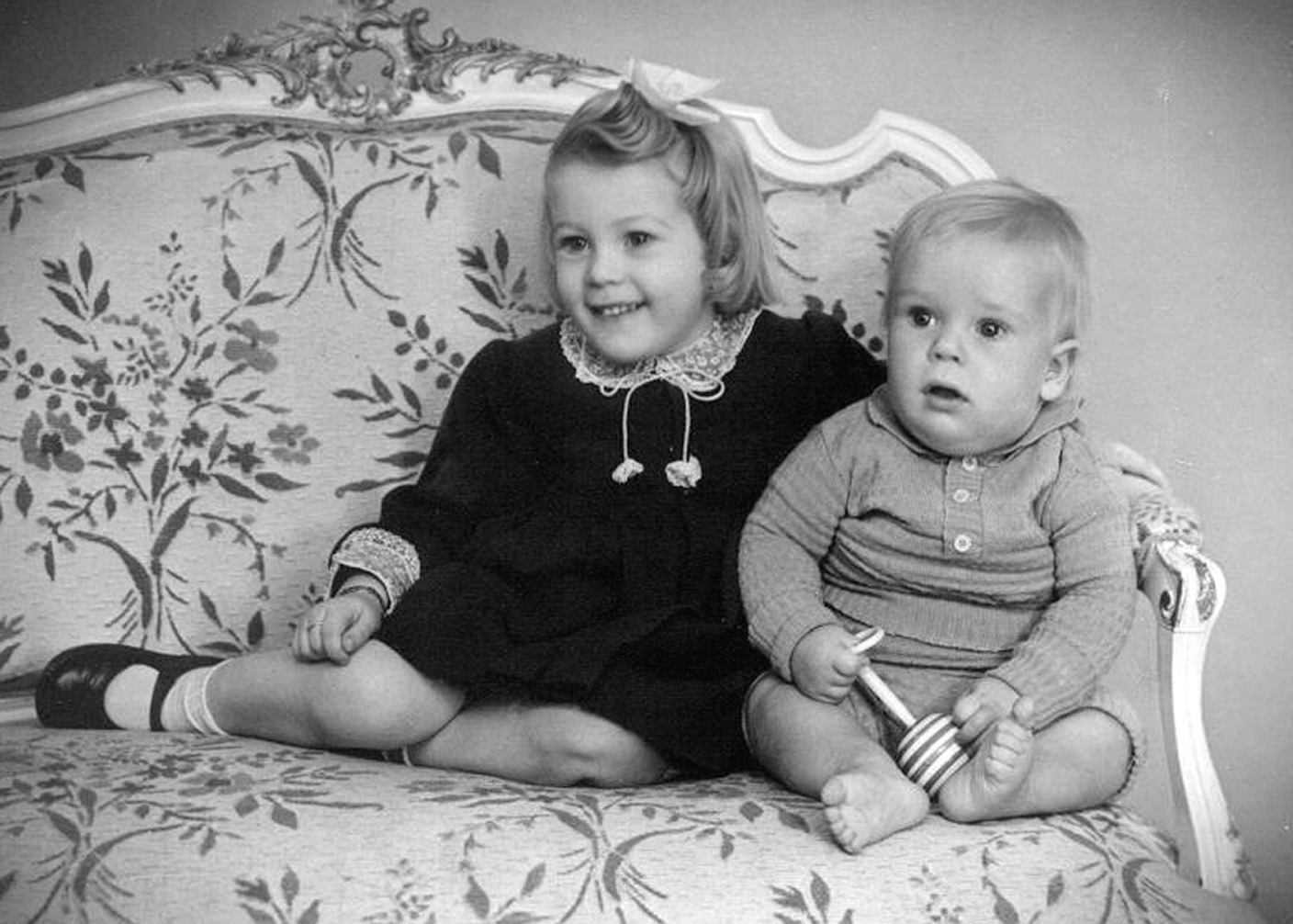
Ingrid & Kenneth, Copenhagen, 1947
Dagmar's son Anker Børge Jørgensen was born 1 August 1913 at Rigshospitalet in Copenhagen. Family memory suggests uncertainty around his early years, including periods of foster care on a farm where conditions were harsh. These experiences left marks that were rarely discussed.
Anker trained as a mechanical engineer and entered the Danish Merchant Navy during the Second World War, serving as First Engineer. Photographs place him in Iceland (Isafjord Island, 1941) and document his wartime travels between Scotland, England, Africa, the Canary Islands, and North America. He carried goods back to rationed Britain for family—an informal supply line driven by skill and responsibility rather than profit.
On 11 November 1942, Anker married Mary Helen Kidd in Edinburgh. The marriage registry from 18 November 1942 survives in the family collection. After the war, the family returned briefly to Denmark, where their daughter Ingrid was born. A photograph from 1945 shows Mary with her mother and infant Ingrid at Port Seton, Scotland.
In May 1951, the family emigrated to Canada aboard the SS Gripsholm. The immigration ID card stamped at Halifax, Nova Scotia on 6 May 1951 marks their official entry. They settled first in Northern Ontario before eventually moving to Toronto.
Anker's working life in Canada was marked by retraining—he earned certification in stationary engineering and refrigeration—and by long hours across multiple jobs. His later years were constrained by severe pulmonary emphysema, likely worsened by industrial exposure and wartime service. He died in Canada in February 1977.
The Jørgensen line carries themes of resilience, technical competence, emotional reserve, and the quiet cost of duty. Its documented ancestry—traced through Danish parish registers to 1550—represents one of the deepest genealogical records in the family archive.