The Kidd story is anchored in Edinburgh, Scotland, and shaped by public service, wartime administration, and the capacity to adapt across cultures.
Andrew Kidd married Mary Helen McVey in Edinburgh in 1903. A photograph from spring 1942 shows Andrew Kidd, identified as "Ingrid's grandfather." The Kidds were established in Edinburgh's working and middle-class networks, with connections to institutional employment and civic life.
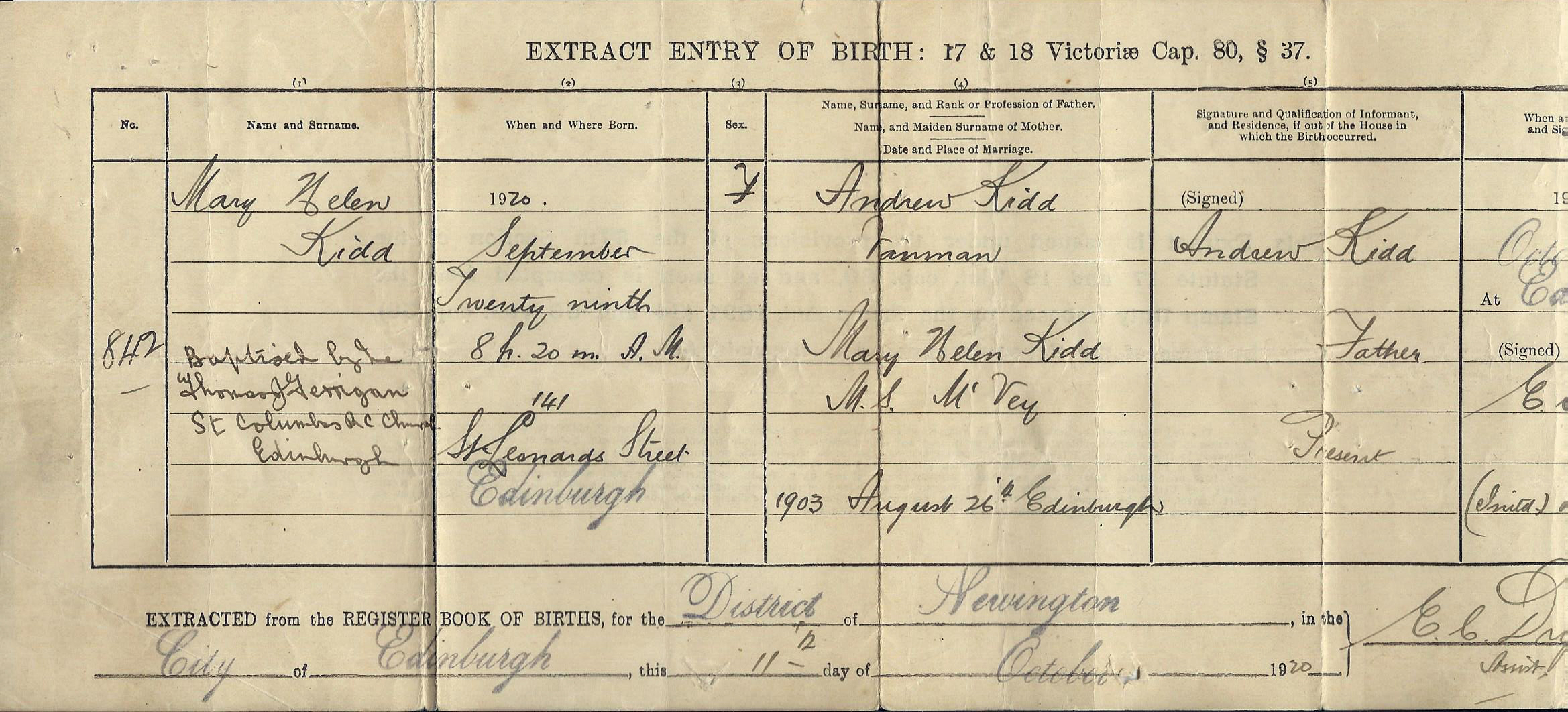
Their daughter Mary Helen Kidd was born 29 September 1920 in Edinburgh. Her birth certificate extract ("Extracte Entry of birth") survives in the collection. She came of age during the Second World War and served in the Women's Royal Naval Service (WRNS). Her work was administrative, precise, and embedded in large institutional systems—skills that would define her adult life.
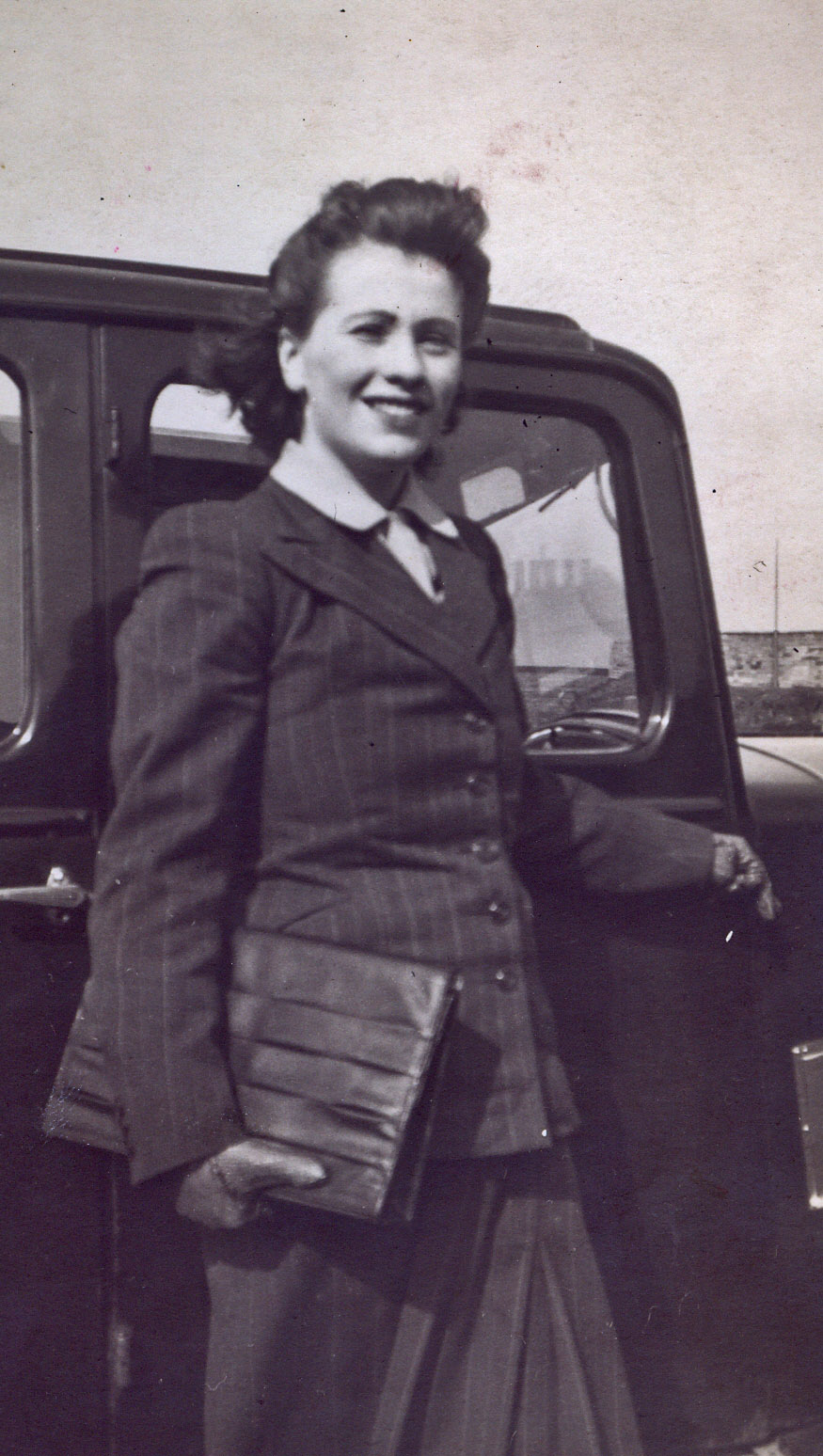
Mary working in Copenhagen, 1945
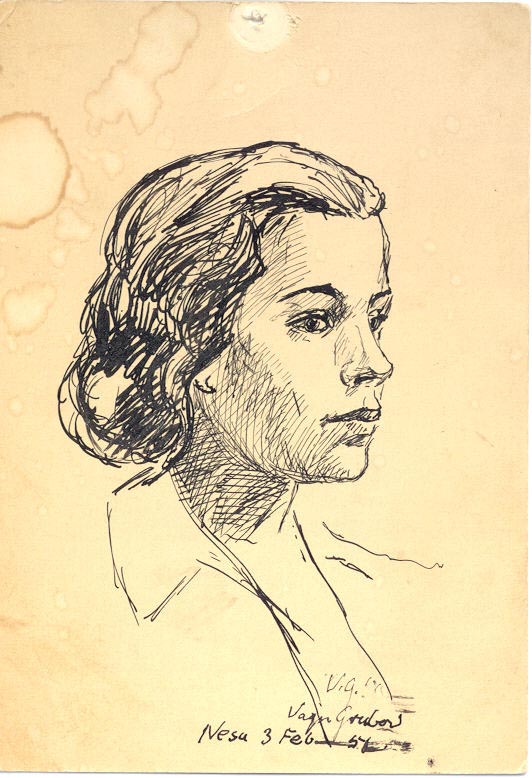
Portrait of Mary, Copenhagen, c.1950
After the war, Mary worked for the Allied High Commission in Copenhagen, stationed in the former German Embassy building. This placement put her at the intersection of diplomacy, reconstruction, and international coordination during the immediate postwar period. She learned Danish during this time—a practical adaptation that would later support family life.
On 11 November 1942, Mary married Anker Børge Jørgensen in Edinburgh. The union brought together two very different backgrounds: Scottish administrative order and Danish technical pragmatism. Their daughter Ingrid was born after the war, photographed as an infant with Mary and her grandmother at Port Seton, Scotland in 1945.
The family immigrated to Canada in May 1951. Mary's National Registration Identity Card (dated 19 January 1946) and her Immigration ID card (stamped Halifax, 6 May 1951) document this transition. A receipt for lodging in Halifax dated 16 May 1951 captures the family's first days in Canada.
Mary adapted to life in Northern Ontario, then Toronto, raising children across multiple relocations. Her wartime experience in administration and her acquired Danish language skills helped hold the family together through the displacement of immigration.
The Kidd line contributed structure, language, and institutional fluency to the family narrative—particularly during periods of transition between countries and cultures. Mary's story reflects endurance, service, and the quiet competence required to manage a family through profound change.