
Louis Martin, throughout his lifetime, became somewhat of a "man for all seasons": student, linguist, philosopher, dreamer, romantic, poet, theologian, writer—and a Bon Vivant. Early on he developed a great love for the French language, and dabbled in learning several others: Italian and Russian being two primary languages, and he subscribed to newspapers in those languages. Later in life he got into classical languages during his theology studies: Greek and Hebrew.
But French was virtually his second language: unlike the others, he actually thought in French. One might say he even dreamed of being French.
He had many interests in life, probably the most significant love was for music: he loved to sing right from his high-school years, through many more years singing with his wife Eleanor, an accomplished operatic soprano. They sang regularly at church and as guest singers at many other churches; they were also involved in the home church choir. He also loved the opera, the ballet, and collected much music—Bach, Mozart, Vivaldi, and recordings by the great tenors and sopranos in the music world.
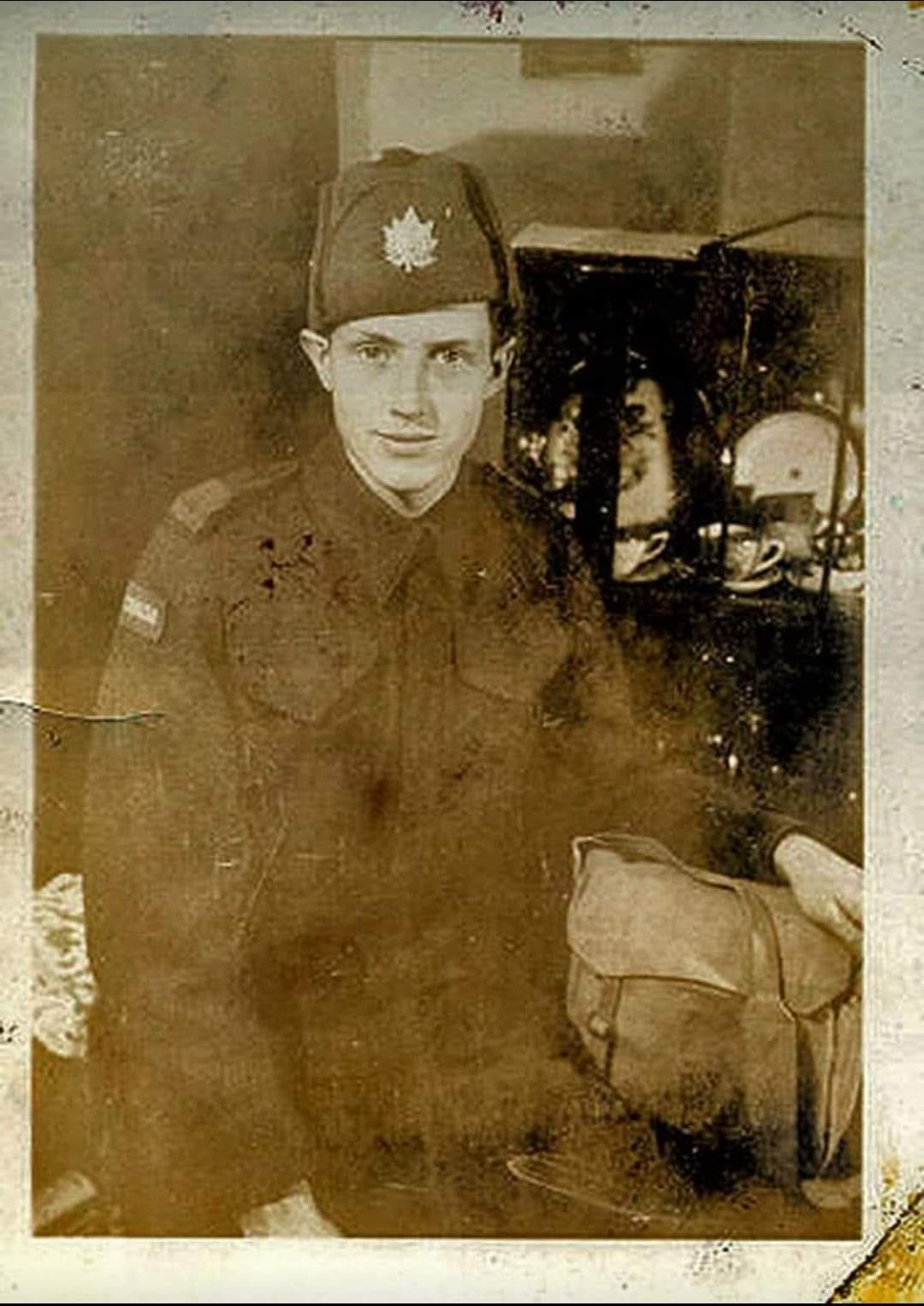
Louis off to war, 1942
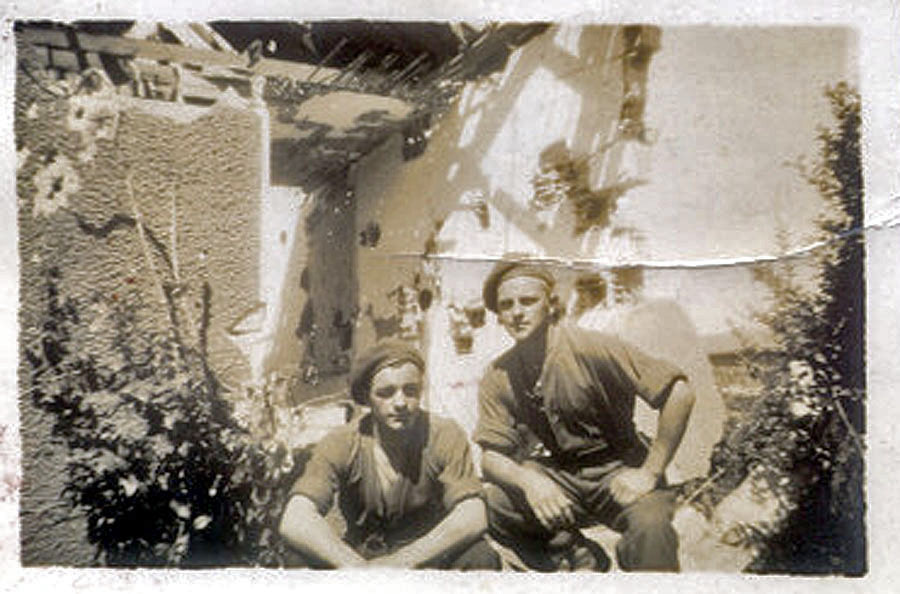
Normandy, D-Day, 1944
Origins
Louis Martin was born the son of a second-generation Canadian; his great-grandfather came from Kent, England. His mother Flora came to Canada as a young woman from the Highlands of Scotland. They lived in the northern reaches of Toronto, in the Eglinton–Mount Pleasant neighbourhood, where his father and grandfather were born and raised.
War Service
In August of 1940, at age 18, he signed up with the Irish Regiment of Canada—non-permanent Active Militia. His attestation form notes his occupation as "Mechanic" and his religion "Presbyterian". Around the same time he held other jobs: truck driver for Eaton's, and chemical assistant at Toronto's Drug Trading company.
A little over a year later, with but three years of high school education, Louis enlisted in the Royal Canadian Army, Queen's Own Rifles regiment, and married Eleanor Stainton—they eloped virtually before the army took him away for special training.
He must have shown significant intelligence and aptitude, for he was selected for specialised, confidential training as a Radar Technician, a top-secret technology developed in Canada and used in the Battle of Britain to detect and warn of German bomber attacks across the English Channel. Over the next four years he served in Canada, England, and Continental Europe following the Allied invasion.
During his military career, he was reassigned as a gunner in the 2nd Canadian HAA Artillery (Heavy Anti-Aircraft). Later, after the Allied invasion of France, he was again reassigned to an infantry division as Rifleman. He didn't talk much about the war after his discharge in 1945—other than the dangerous work cleaning the radar antennae swinging out over the Cliffs of Dover, and the excruciating, constant, loud thundering of the big guns when he was in artillery.
"Martin is a tall well developed alert young man of 23 with a friendly cooperative manner... it is this counsellor's knowledge from previous personal experience that Martin has a very high learning ability and an aptitude for electronics... he has applied for a temporary job with the postal service and also plans to do some free lance writing for which he has quite a flair."
— Captain Maitland, Army Counsellor, upon Louis's discharge
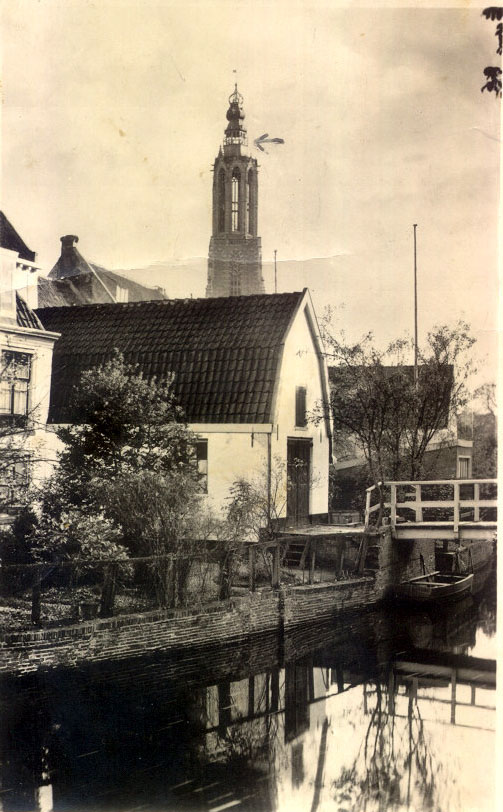
Amersfoort, Holland, 1945

Louis meets his son Peter, 1945
Post-War Life
His first metamorphosis in post-war life was working for his father-in-law's hardware business: Stainton's Hardware Ltd. He also worked for Sherwin Williams paint. It was during this time that he took up hunting and fishing with his new pals—likely the start of his lifelong love of the outdoors, nature, and wildlife, and his many visits to Algonquin Park. In later years he took up fly fishing.
His next job was with the TTC, driving buses and streetcars into the 1950s. Around this time he began furthering his education. He became qualified for office work and got work with the Grolier Society, publishers of an Encyclopaedia and The Books of Knowledge. Eventually he became certified through the University of Toronto's Credit Management courses, became designated Member of Credit Institute of Canada, and gained the title of Credit Manager.
Unsatisfied in the business world, he began taking other courses and studying languages—although he had been fluent in French since his youth. He took an interest in mission work, travelling all over southern and central Ontario on behalf of Wycliffe Bible Translators, all while carrying on as a Credit Manager.
Pastoral Counsellor
But perhaps what he is best known for is his work in counselling. His interest in working with people led him to many studies at Waterloo Lutheran University in theology, philosophy, and psychology. In 1967 he left Grolier and became ordained in the Baptist church to practice as a pastoral counsellor. He began working with Christian Counselling Services—at first part-time, working into an internship where he counselled under supervision.
It was during these early years of this career change that a tragic period came about with the long illness and ultimate death of Eleanor in December 1975. But in spite of all, he carried on, throwing himself further into his work.
Over the years he branched out into cultural and artistic interests—one major aspect being his patronage of the National Ballet of Canada. He loved to take his nieces and others to fine restaurants with expensive wines, prior to or following the ballet.
Drawing upon his business experience, Christian Counselling called upon him to serve as treasurer, and later Executive Director. In 1984, however, he had a serious car accident which impaired his memory function. The following year he left Christian Counselling and carried on with counselling in his own private practice.
Final Years
As the years went on, his health gradually deteriorated. In late 1999 he was unable to handle a significant caseload of clients and moved to more modest accommodation. Within a few more years, he was no longer considered safe to live on his own. In 2002 he began living in a nursing home environment, first at Casa Verde, then at Carefree Lodge at Bayview and Finch, North York, where he adapted well and lived comfortably.
In the early spring of 2007 his condition worsened. After 18 days in Sunnybrook Hospital, he returned to Carefree Lodge but never returned to his former level of health. On Tuesday, 10 April 2007, he succumbed to heart failure and died peacefully in his sleep.